At Profound’s Zero Click event this month, one thing became painfully clear:
brand discovery and purchase decisions are rapidly moving away from blue links and traditional search behaviour.
(And yes, congrats to the Profound team on a genuinely brilliant event.)
We’re now entering an era where the customer journey is shaped by AI prompts, conversational engines, and creator-led environments long before a user ever lands on a website.
One stat from the event captured this shift perfectly:
58% of people surveyed already use AI/LLM prompts as part of researching and selecting new brands and products.
That’s not a future trend. That’s now.
And it reinforces something we’ve been learning the hard way across dozens of growth analyses:
If customers stop clicking, then click-based value models stop working.
But the truth is, this isn’t a new problem. It’s just becoming unavoidable.
What We Learned From Analysing Incremental Revenue Across Platforms
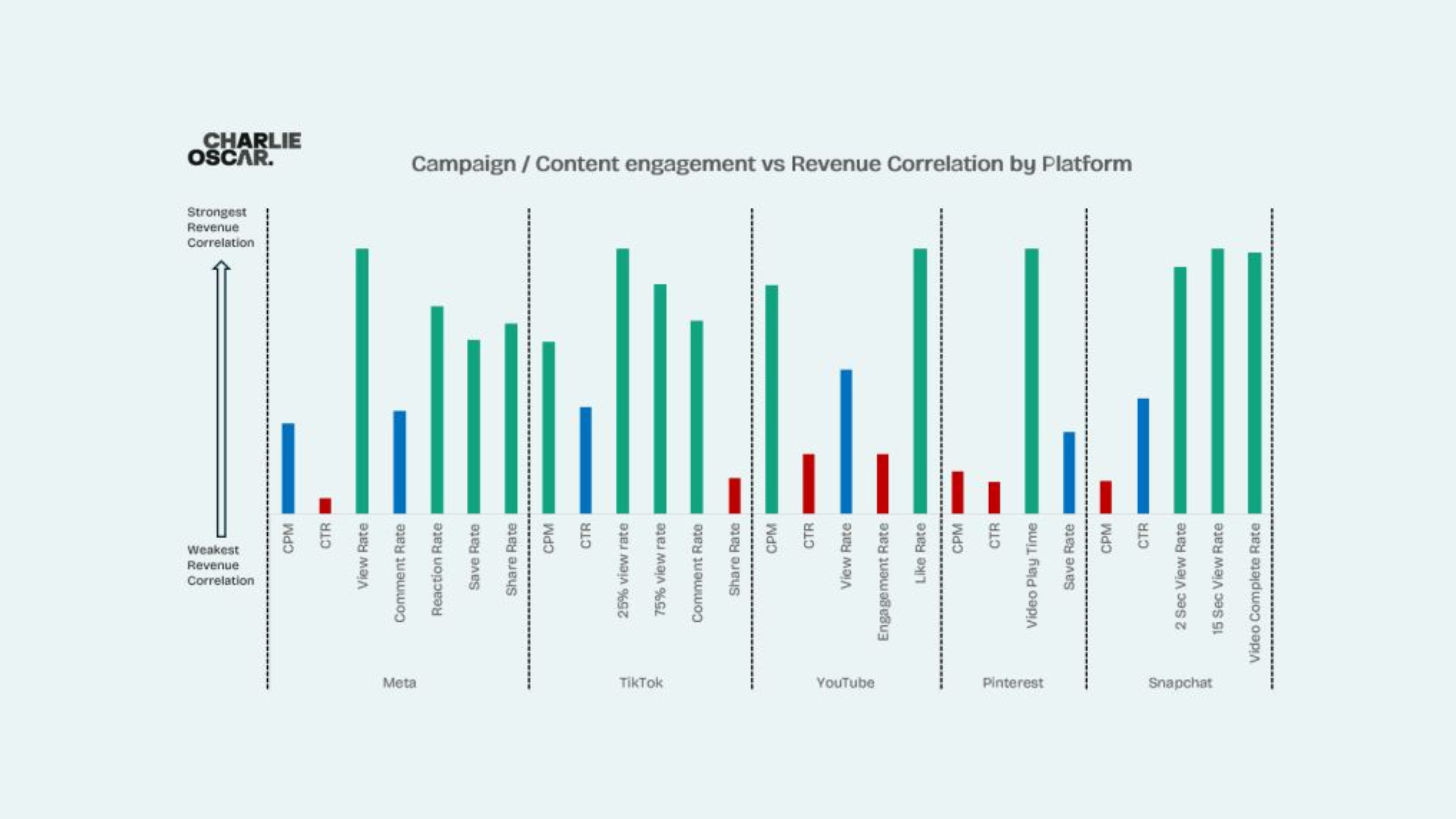
A few months ago, we ran an analysis looking at which campaign metrics actually predict incremental revenue across major marketing platforms.
It wasn’t subtle, the results were remarkably consistent:
Clicks (CTR) is a terrible predictor of incremental value.
-
Channels that drive no click response could still drive significant incremental revenue.
-
Meanwhile, the formats and content that generate huge click spikes often contribute minimal revenue once you strip out noise and attribution distortion.
It’s counterintuitive, because for years we were taught to optimise for CTR.
But in reality:
-
CTR rewards cheap, low-friction, curiosity-click behaviour
-
CTR penalises upper-funnel, influence-based behaviour that actually changes preference
-
CTR rarely reflects how people discover or decide anymore
And now, with AI engines guiding product discovery inside environments where links aren’t even part of the UX, that gap gets even wider.
5 Things We Tried (And What We’d Do Differently)
Here’s what’s worked, and what hasn’t, as we’ve experimented with measuring value in zero-click environments:
1. We tried optimising CTR as a proxy for quality
Didn’t work. CTR inflated on cheap clicks and told us nothing about who would buy.
2. We shifted to engagement rate
Better, but still noisy, vanity behaviours creep into the metric quickly.
3. We built incrementality models across channels
This is where things started to make sense.
Incremental revenue consistently correlated with reach, delivery, and audience quality, not clicks.
4. We tested holdout-based measurement on “no-click” formats
This unlocked hidden value in channels previously under-credited, especially video, creators, and UGC.
5. We began weighting upper-funnel signals as leading indicators
View-through lift, search demand uplift, brand term changes, these signals predicted revenue far earlier than CTR ever could.
If we were to start from scratch today, we’d skip CTR entirely and build a measurement stack that assumes zero click as the default state, not the edge case.
What This Means for Brands Right Now
Zero-click environments aren’t coming, they’re already here.
Google SGE, TikTok, ChatGPT, Perplexity, Instagram Reels, YouTube Shorts… discovery now happens inside ecosystems, not on your site.
If brands don’t have a way to understand the value of behaviours without clicks, they’re effectively flying blind.
The playbook now looks more like:
-
Measure incrementality, not interaction
-
Optimise for influence, not click-through
-
Build content for discovery inside the feed, not just acquisition on the landing page
-
Treat AI engines as a brand-discovery channel, not a technical novelty
-
Attribute value to attention + preference shifts, not button presses
Because the brands that win the next era of discovery will be the ones that understand something simple:
When people stop clicking, value doesn’t disappear, it just becomes harder to see.
And the brands that can see zero-click value will make much better decisions than those still optimising blue links.
Award Winning Thinking
Featured for big wins across Marketing Science, Influencer, Paid Media, Creative, and Consultancy.