Most brands hold their influencer budget until November, spend it across the sale window, and judge it on the revenue that lands against a creator click or discount code. The numbers come back thin. And the following year, the budget gets cut because they are measuring the wrong thing in the wrong window.
Charlie Oscar’s MMM analysis across 30+ brands shows around 80% of influencer driven revenue never touches a creator click. That is £4 generated elsewhere in the marketing system for every £1 attributed directly. In peak week, when search and retargeting absorb the credit for demand that was created weeks earlier, the gap is at its widest. The channel that primed your Black Friday shows up in the report as the channel that lost you money.
Getting this right comes down to four decisions.
- Spend it before the sale, not during it
- Direct attribution shows you one fifth of the picture
- Brief for authority, not category
- A plan you can’t change isn’t a plan
1. Spend it before the sale, not during it
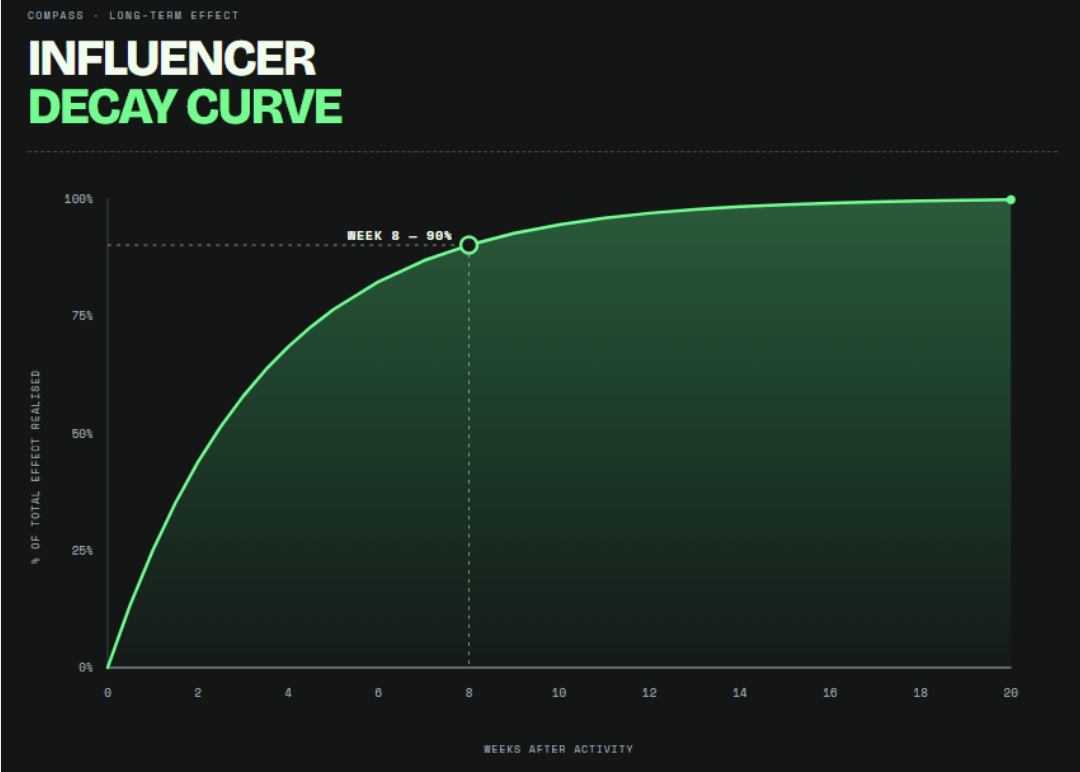
Influencer activity has a payback lag. Its job is to build familiarity and intent in the weeks before a demand spike, so that when your conversion channels go to work during the sale, they land on an audience that already knows you. Run it in peak week and it arrives after the audience has decided.
Charlie Oscar’s analysis shows paid search click through rates rise 15% to 20% when brand familiarity increases through creator activity, and paid social performs 20% to 30% stronger when supported by active influencer investment. Those effects take weeks to build and weeks to feed through. They are worth most going into Black Friday, not during it.
Black Friday 2026 falls on Friday 27 November. Cyber Monday is Monday 30 November. Working back from there:
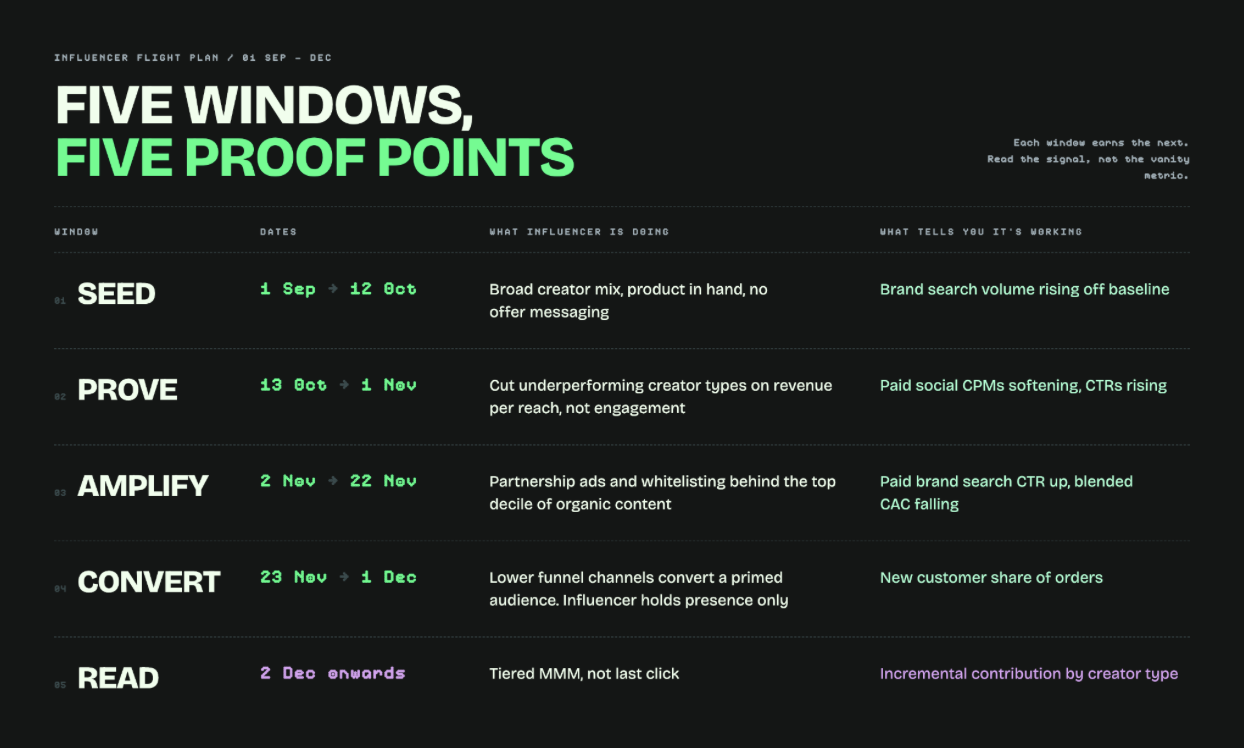
The objection to this is always the same: finance won’t release Q4 budget in September. It doesn’t need to. This is not additional money, it is the same money moved eight weeks earlier. Fund the seeding phase from always on budget and treat the November spend as amplification of content you have already proven, rather than a cold start. The brands that struggle here are the ones asking for incremental investment. The ones that succeed are the ones re-phasing what they already have.
2. Direct attribution shows you one fifth of the picture
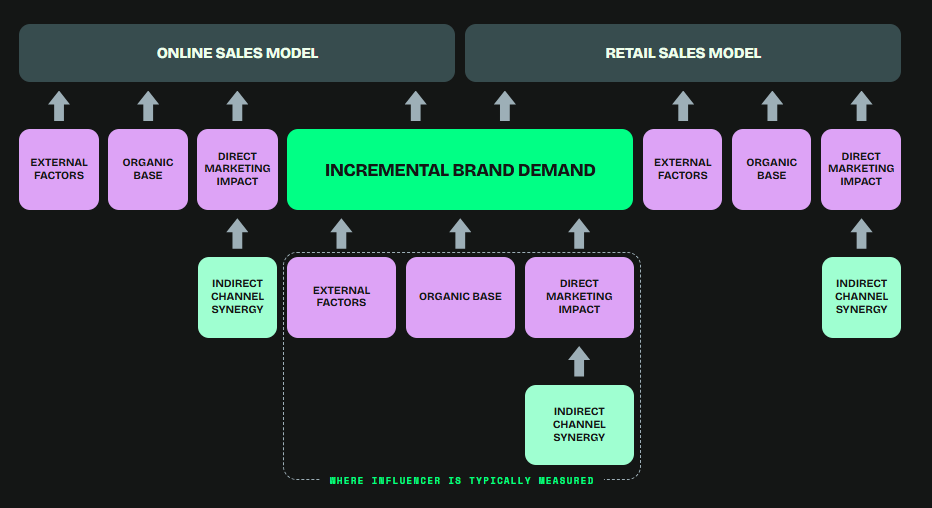
Influencer generates most of its commercial value indirectly, and peak week is when that is hardest to see. Search and retargeting absorb the last click credit for demand influence created earlier.
Around 80% of influencer driven revenue sits outside direct attribution. So reporting built on clicks, codes and last touch conversions is showing you, at most, a fifth of what happened. Charlie Oscar’s analysis, presented through WARC, puts the cost of getting this wrong at up to 64%: that is how much you understate true commercial impact by measuring influencer as an affiliate channel rather than a broadcast one.
If your Black Friday reporting runs on affiliate style tracking, that understatement is already in your numbers. It is also the reason the priming activity is first to be cut.
Reporting that holds up captures three things: the change in brand search demand, the effect on paid media efficiency, and the revenue that appears in other channels. If your live peak dashboard is missing any of them, you are not measuring the channel, you are measuring its smallest component.
Post campaign, the question is incrementality, not attributed revenue. How much revenue did the activity cause, rather than sit alongside? At peak this matters more than at any other point in the year, because demand is high enough that attribution flatters everything. Where the clearest signals of impact are indirect, a tiered MMM approach is the cleanest way to separate them and allocate influencer a contribution that reflects its actual effect on the system.
3. Brief for authority, not category
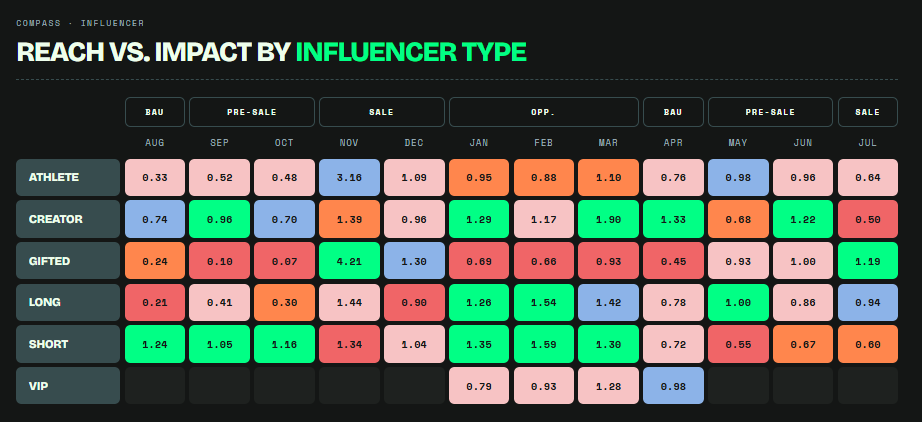
Creative is the area most brands handle worst at peak. The default is to find the creators and formats that got the most engagement last year and repeat them. That tells you what performed on platform. It tells you nothing about what drove revenue, and reach is a poor guide to either.
Charlie Oscar’s Tangle Teezer campaign showed how far apart the two sit. Lifestyle, Entertainment, Family and Hair Professional creators generated 14x more revenue than Beauty and Wellness creators.
The reason is worth more than the number. Beauty and Wellness is the obvious category fit, which is exactly the problem. That audience is saturated with product recommendation, so a Tangle Teezer post competes with fifty others for the same attention and the same purchase. A hair professional recommending it carries occupational authority the audience cannot get elsewhere. A family creator reaches someone with a practical problem rather than a browsing habit.
So the rule for the brief is authority and problem context, not category adjacency. Ask who the audience already trusts on this specific question, and what moment the product actually solves. Then build the mix from that. The answer moves through the year and it moves again at peak, when purchase intent is broader and less category led than it is in January.
4. A plan you can't change isn't a plan
The last decision is the most revealing. Is the activity being adjusted on live performance data, or delivered against a brief written in September?
Running it properly means using in flight data to move creator mix, budget weighting and channel allocation while the peak is still live, and reading influencer against what the rest of the media mix is doing rather than in isolation. That requires forward indicators, not sales reports. Four worth watching weekly:
- Brand search volume against pre activity baseline. The earliest signal that familiarity is building.
- New versus returning customer split. Tells you whether you are acquiring or discounting to your existing base.
- Paid social CPMs and blended CAC. Efficiency gains here are influencer showing up in someone else’s numbers.
- Revenue per reach by creator type. Not engagement rate. Engagement rate has never paid an invoice.
The trigger to act on is straightforward. If brand search has not moved off baseline by mid November, the creator mix is wrong and adding budget will not fix it. If it has moved, weight harder into the creator types driving it and put paid amplification behind their content.
A plan built on good evidence can still meet conditions it was not built for. Live data and the willingness to move are what turn a strategy into a result.
How we run it
Charlie Oscar builds the measurement into how peak campaigns run, rather than applying it in January when the decisions are already made.
COmpass, our full funnel analytics platform, makes the indirect effects visible while the peak is live. Brand search demand, paid media efficiency and cross channel conversion are readable in near real time, which means creator mix and budget weighting get decided on what is happening now rather than what happened last year.
Our Growth Consultancy function puts that measurement into planning while it can still change the outcome. A finding like the 14x Tangle Teezer difference reaches the next brief in days, not at the annual review. The measurement and the strategy sit in the same room.
Where this leaves you
If you are reading this before September, you can still phase the budget properly. If your reporting still runs on codes and clicks, you have around ten weeks to fix it before it produces another number that gets your best performing channel cut.
The brands that win Black Friday are not the ones that spend hardest in peak week. They are the ones that arrive at peak week already known.
Frequently asked questions
When should influencer activity run for Black Friday?
Before the peak, not during it. Influence builds familiarity and intent with a payback lag, and Charlie Oscar’s analysis shows paid search click through rates rise 15% to 20% and paid social performs 20% to 30% stronger when that familiarity is in place. Seed through September and early October, prove and cut through late October, amplify the winning content through the first three weeks of November, then let lower funnel channels convert during the sale.
How should I measure Black Friday influencer activity?
Capture the indirect effects, not just the direct ones. Clicks, codes and last touch conversions account for around 20% of total influencer driven revenue. The other 80% shows up in brand search demand, paid media efficiency and conversions through other channels. Charlie Oscar’s analysis, presented through WARC, found that measuring influencer as an affiliate channel understates true impact by up to 64%.
How do I know if it drove growth rather than just rode the peak?
Test incrementality, not attributed revenue. Charlie Oscar’s analysis across 20 brands found only around 10% of paid brand search conversions are genuinely incremental, and peak demand flatters every attribution model. A programme that drove growth can show how brand search demand, paid media efficiency and new customer acquisition moved during and after the activity.
How much of my Black Friday budget should go to influencer?
The more useful question is when, not how much. Most brands are not underspending on influencer at peak, they are spending it in the wrong eight weeks. Before you change the number, re-phase what you already have so the majority lands before the sale rather than inside it, then size the next round on what the incrementality read tells you.
Should creators use discount codes at Black Friday?
Use them, but do not measure with them. Codes work as a conversion prompt and they are useful for creator side attribution and payment. They are a poor measure of contribution at peak, because a code only captures the buyer who was ready at the moment they saw the post. In a window where every channel is discounting, code redemption tracks who converted last, not what caused the demand.