
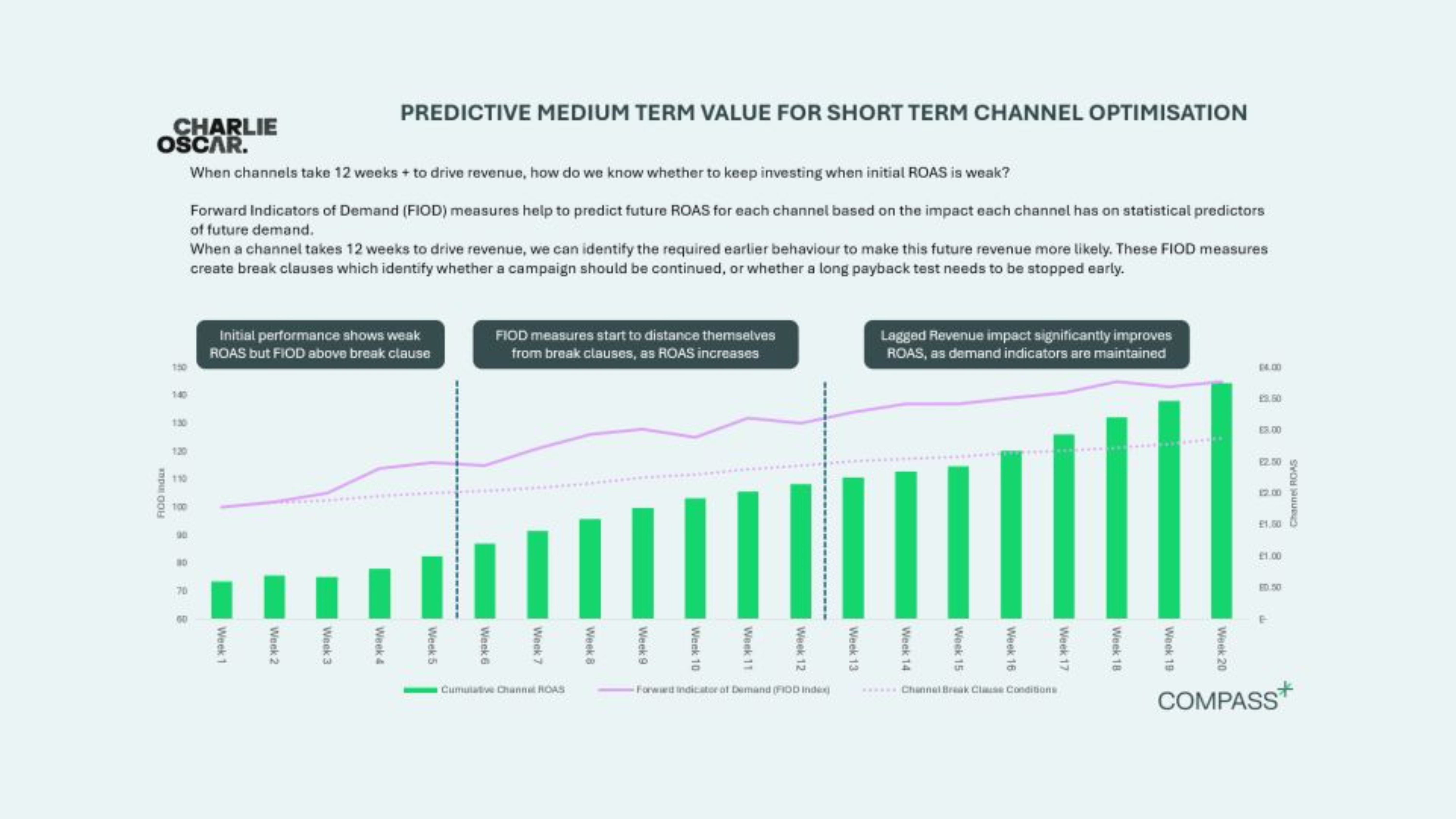
We hear this question a lot: “How do we know whether to continue investing in a channel when initial performance looks weak?”
It’s a tricky one. Some marketing channels give almost instant feedback, you can see conversions within days, especially if you’re targeting audiences who are already in-market. Other channels, though, take weeks or even months to show revenue impact. YouTube and CTV are classic examples: check performance after just a few days, and they often appear to fail. Especially if you judge them purely on short-term clicks, they can look like a poor investment.
Yet, across multiple brands, we consistently see strong ROI from these channels, it’s just that the impact isn’t immediate. There’s a long lag between campaign activation and the revenue that follows.
So, does this mean you need to wait 12 weeks (or more) to know if a channel is working? No. Speed of decision-making is crucial.
Here’s how we tackle it:
1. Build Tiered Measurement Models
We create models that map short-term behaviors to long-term value. Essentially, we ask: what early signals does a channel need to hit to have a chance at driving longer-term revenue?
These models produce statistical break clauses, which define a minimum threshold for short-term performance. If a channel fails to hit that threshold, it’s unlikely to generate meaningful long-term value. If it does pass, it’s not a guarantee, but it gives the channel the opportunity to succeed.
2. Embed Break Clauses Into Every Activation
By embedding these break clauses into campaigns, we can:
-
Make fast decisions without waiting weeks for final revenue results.
-
Align short-term indicators with long-term measurement, using geo holdouts or deseasonalized data to isolate channel-driven change.
-
Incorporate MMM outputs to account for external factors, ensuring smarter attribution.
3. Avoid Over-Focusing on Short-Term Returns
If you judge everything by immediate ROI, you massively limit growth potential. Some channels will always underperform in the short term but deliver exceptional long-term impact.
Pairing long-term measurement with short-term break clauses allows you to:
-
Maintain speed and agility in decision-making.
-
Keep a focus on long-term impact without waiting months to react.
-
Make smarter investments that unlock incremental marketing value.
The Takeaway:
Don’t let early performance blind you. Measure the short-term signals that predict long-term success, embed break clauses, and make decisions confidently, without waiting 12 weeks for the “truth.”
Award Winning Thinking
Featured for big wins across Marketing Science, Influencer, Paid Media, Creative, and Consultancy.