What we’ve learned from running omnichannel measurement across hundreds of campaigns
If you’re an omnichannel brand, here’s the uncomfortable truth we learned early (and repeatedly): you don’t control where customers buy your products. In fact, customers are often more loyal to their preferred buying platforms; Amazon, Boots, Target, Sephora, than they are to the brands themselves.
We learned this the hard way while trying to nudge demand toward higher-margin DTC stores. On paper, it looked brilliant. In practice? It was one of the least efficient levers we ever pulled.
Here’s the breakdown of what really happens, what we tested, and what we’d do differently.
1. Customers buy where they want, not where you point them
Purchase channels are habits. And habits are expensive to change.
Amazon loyalists stay Amazon loyalists.
High-street shoppers stay high-street shoppers.
Only a tiny minority will change their behaviour because your ad points somewhere else.
The cost of breaking those habits will obliterate any margin gains you hope to make. It’s a fool’s errand.
2. Most incremental revenue doesn’t come from ad clicks
The biggest misconception in marketing? That where you send the click determines where people buy.
It’s wrong.
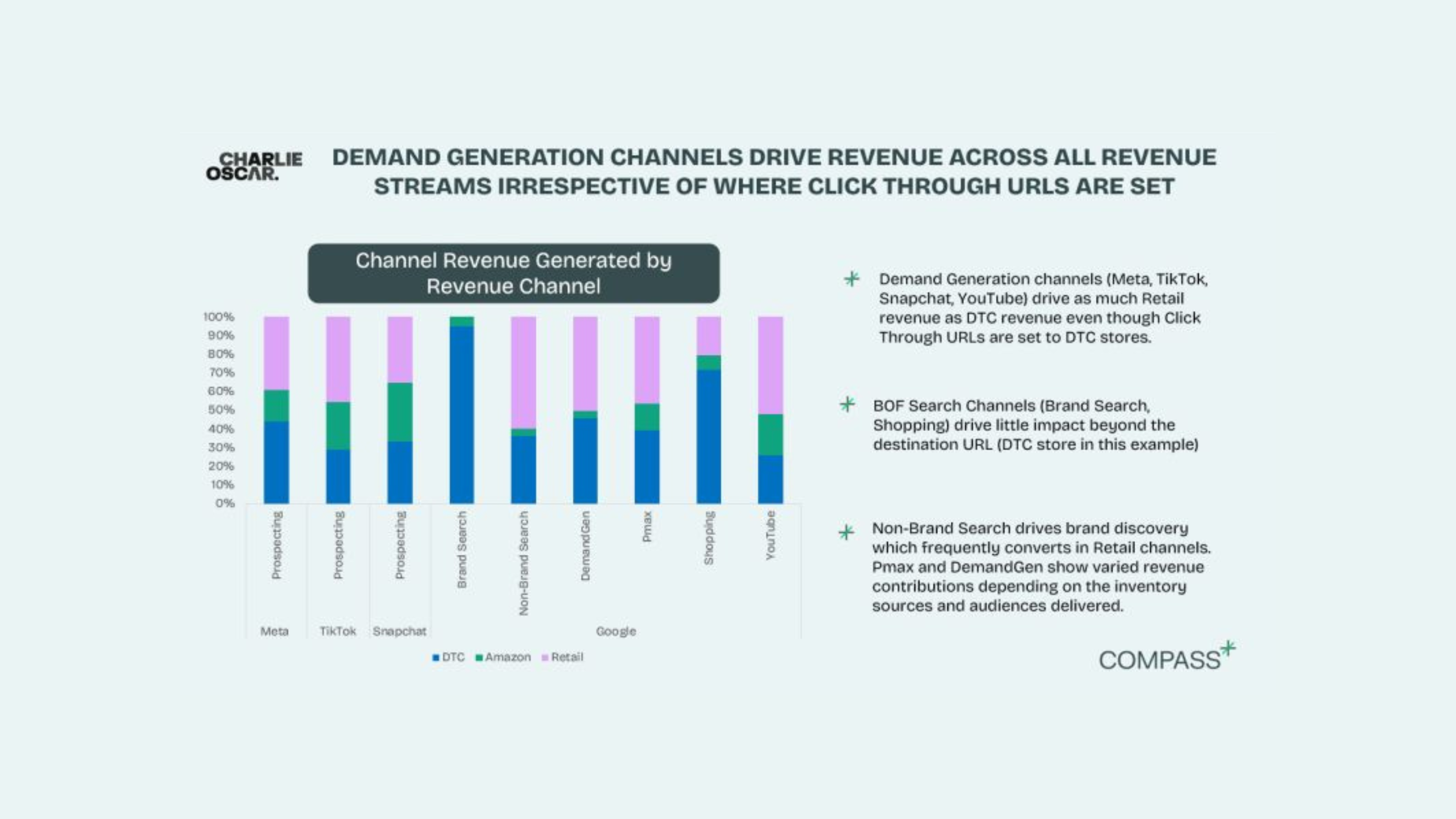
80%+ of incremental conversions from Meta, TikTok, and YouTube come from users who never click.
They see the ad. They remember it. They buy later… on the platform they trust, not the one in your URL settings.
So while all your paid traffic points to DTC, your actual revenue distribution looks nothing like your ad reports. You’re measuring a fantasy.
3. Top- and mid-funnel campaigns drive halo revenue you can’t see in native reporting
The results we’ve observed are shocking to most brands.
- Meta prospecting often drives 2x more halo revenue across retailers than it does on DTC. This never shows up in Meta’s reports, which means most brands are dramatically undervaluing their most powerful efforts.
- YouTube typically drives equal or greater revenue on Amazon and retail as it does on DTC. Even when every single click goes to the DTC store.
The total revenue impact can be 3x higher than what Google Ads reports.
This was a breakthrough insight for us: platform-reported ROAS tells a dangerously incomplete story.
4. We tested redirecting traffic to DTC. Here’s what actually happened.
We hoped changing URLs would shift the channel mix.
Reality check: it barely moved the needle.
What did?
Showing the behaviour we wanted to encourage.
Creator content showing real retail purchase moments, in-store baskets, shelf shots, scanning barcodes, drove a 3x stronger retailer uplift versus similar content that didn’t show the shopping journey.
The lesson is clear: amplify natural buying behaviours, don’t try to redirect them.
5. Promotions add another layer of chaos
Promotions are gravity. They pull demand toward whichever channel is discounted.
- Retailer goes on promotion → retailer revenue spikes.
- DTC revenue often drops simultaneously.
The net uplift is never the gross uplift shown in retailer dashboards.
Promos cannibalise other channels far more than brands expect. Unless you disentangle these effects from your media effects, you’re flying blind and making the wrong calls.
Our Playbook: What We Do Now
After hundreds of attribution studies, this is the playbook we trust.
- Stop fighting channel preference, design for it. Build your strategy around your customers’ natural habits, not against them.
- Stop over-optimising for click-through data. Your biggest revenue drivers are invisible in platform reporting.
- Measure total revenue impact. If you don’t include the Amazon and retail halo, you will under-invest in your most efficient channels.
- Use creative to influence behaviour. Show the shopping journey you want. Don’t expect a URL to do the heavy lifting.
- Isolate promo effects from media effects. If you don’t control for this, you’re making decisions based on flawed data.
The final takeaway
Omnichannel isn’t a funnel. It’s an ecosystem.
And ecosystems don’t obey the rules your dashboards suggest.
Brands that win are the ones who accept this. They stop forcing behaviour that won’t shift. They build media, measurement, and creative around the way people actually shop.
Award Winning Thinking
Featured for big wins across Marketing Science, Influencer, Paid Media, Creative, and Consultancy.